-
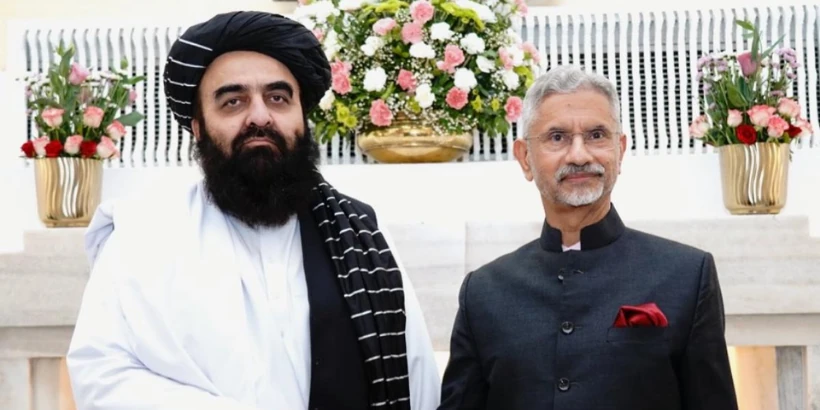
External Affairs Minister S. Jaishankar with Afghanistan’s Acting Foreign Minister Mawlawi Amir Khan Muttaqi during a bilateral meeting in New Delhi[15]
The Great Game 2.0: India Afghanistan Partnership in the New Silk Road Era
10/12/2025 By JKSCUKThe recent diplomatic dance between a Taliban minister and Indian officials is more than a cautious thaw, it is a bold move in a high-stakes geopolitical chessboard spanning the heart of Asia. This is not merely about reopening an embassy; it is about India positioning itself as an indispensable player in the new "Great Game," where pipelines, trade corridors, and digital networks are the prizes, and Afghanistan is the crucial, contested square on the board. India’s engagement is a fascinating gambit: leveraging humanitarian aid and historical goodwill to secure a foothold in a region that is the key to a trillion-dollar Eurasian economic web.
Beyond the Khyber: From Buddhist Pilgrims to Digital Corridors
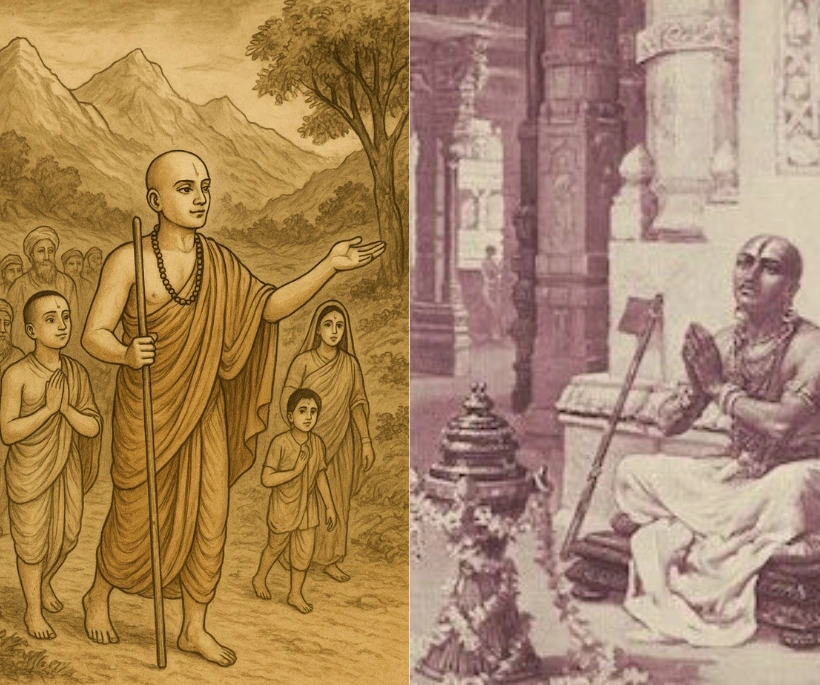
The historical connection between India and Afghanistan is a tapestry woven by Buddhist monks, Mughal caravans, and Silk Road merchants. In the 21st century, this ancient link was modernized into a strategic partnership, with India building Afghanistan’s democratic infrastructure to the tune of billions, creating deep reservoirs of popular goodwill. The Taliban’s 2021 return forced a dramatic retreat, leaving India’s sprawling investments: from the Salma Dam to the Afghan Parliament in a state of suspended animation [3]. This strategic vacuum transformed Afghanistan from a partner state into a volatile pivot point in a renewed rivalry for Central Asian influence, with China, Russia, Pakistan, and Iran all advancing their pieces [4].
The Pragmatist’s Playbook: India’s Multi-Dimensional Strategy
India’s decision to re-engage is a masterclass in realpolitik, driven by a clear-eyed assessment of five critical arenas:
- The Spy vs. Spy Arena: At its core, this is about security. A formal presence in Kabul is an intelligence necessity, providing a front-row seat to monitor the activities of entrenched terror groups like the Haqqani Network and the rising threat of ISIS-Khorasan [5]. It is a direct attempt to prevent Afghanistan from becoming a safe haven for militants targeting India.
- The New Silk Road Race: The grand prize is connectivity. Afghanistan is the linchpin for India’s dream of accessing Central Asian markets via the International North-South Transport Corridor (INSTC) and its Chabahar Port project in Iran [8]. Engaging the Taliban is a pragmatic, if unsavory, step to keep these corridors alive, countering China’s Belt and Road Initiative and its massive investments in Pakistan.
- The Deoband Dimension: Faith as a Diplomatic Channel: India is uniquely leveraging a shared theological heritage. The historic Darul Uloom Deoband seminary in India is the ideological forebear of the Taliban’s Deobandi interpretation of Islam. The high-profile visit of Taliban Foreign Minister Mawlawi Amir Khan Muttaqi to Deoband in October 2025 was a masterstroke of faith-based diplomacy [12]. It served multiple purposes: it provided a culturally resonant platform for dialogue beyond state-to-state formalities, acknowledged the Taliban’s ideological roots in a way that grants a subtle, religious legitimacy, and aimed to create a channel of influence distinct from Pakistan’s militant focused ties with the Taliban [11, 13]. This move attempts to reframe the engagement from purely transactional to one with civilizational and theological resonance.
- The Humanitarian Shield: India’s consistent wheat and medical shipments are a strategic asset. This aid fulfills a moral duty while acting as a powerful tool of soft power, reminding Afghans of India’s reliability in contrast to other regional actors. It provides a non ideological platform for ongoing interaction and influence [4].
- The Diplomatic Jujitsu: By engaging without recognition, India seeks to outmaneuver Pakistan’s traditional "strategic depth" in Afghanistan. It aims to speak directly to the Taliban, offering an alternative to complete dependence on Islamabad, thereby complicating Pakistan’s influence [10]. The October 2025 joint statement, with its focus on trade and "fighting terrorism," is a first move in this complex game [1].
The Tightrope: Ideology, Interests, and the Ghost of 9/11
This gambit is fraught with peril. India walks a diplomatic tightrope, engaging a regime whose treatment of women and minorities is anathema to Indian values and its global democratic standing [9]. The fundamental question remains: can you do business with the Taliban without legitimizing their ideology? The Deoband outreach, while strategically clever, is particularly double-edged. It risks being perceived as endorsing the Taliban’s regressive social policies, given their shared theological lineage, and could alienate progressive voices within India [14]. Furthermore, the Taliban itself is not a monolith; factions with deeper ties to Pakistan may actively undermine any Indian gains, making security assurances fragile [7]. India’s move also risks creating friction with Western allies who remain staunchly opposed to normalization, forcing New Delhi to constantly balance its regional pragmatism with its global partnerships [9].
Conclusion: A High-Risk Bid for a Central Role
India’s Afghan gambit is a definitive shift from idealistic partnership to transactional, interest driven statecraft. It is a high-risk bid to ensure it is not sidelined in the reshaping of Eurasia. By combining hard-nosed security and economic interests with innovative tools like humanitarian aid and faith-based diplomacy via Deoband, India is playing a uniquely multifaceted game. Success would mean securing its western flank, unlocking continental trade, and establishing itself as a key power broker in Central Asia’s future. Failure could mean sunk costs, strategic embarrassment, and a fortified adversary on its doorstep. By reopening its embassy in Kabul [6], India has not just restored a diplomatic mission; it has placed a bold bet on the geopolitical future of Asia. The world is now watching to see if this audacious play will checkmate its rivals or become entangled in Afghanistan’s enduring complexities.
References[2] Council on Foreign Relations. "India-Afghanistan Relations." Backgrounder.
[4] Deutsche Welle. "Why India is boosting diplomatic relations with the Taliban." January 2024.
[6] Reuters. "India to reopen its embassy in Kabul, Indian foreign minister says." October 10, 2025.
[7] Sareen, Sushant. "India warily welcomes the Taliban." Observer Research Foundation.
[8] Daily Excelsior. "An Upswing in India-Afghanistan Relations." October 2025.
[10] The Loop, ECPR. "India has a new friend: The Taliban."
[12] Vivekananda International Foundation. "Mawlawi Muttaqi at Deoband." October 24, 2025.
[13] Firstpost. "What is Afghanistan's connection to India's Deoband?"
[14] The Diplomat. "Taliban Minister Muttaqi’s Visit to Deoband Seminary in India." October 2025.
[15] The Hindu. “How are India-Taliban relations changing?”. October 2025