-
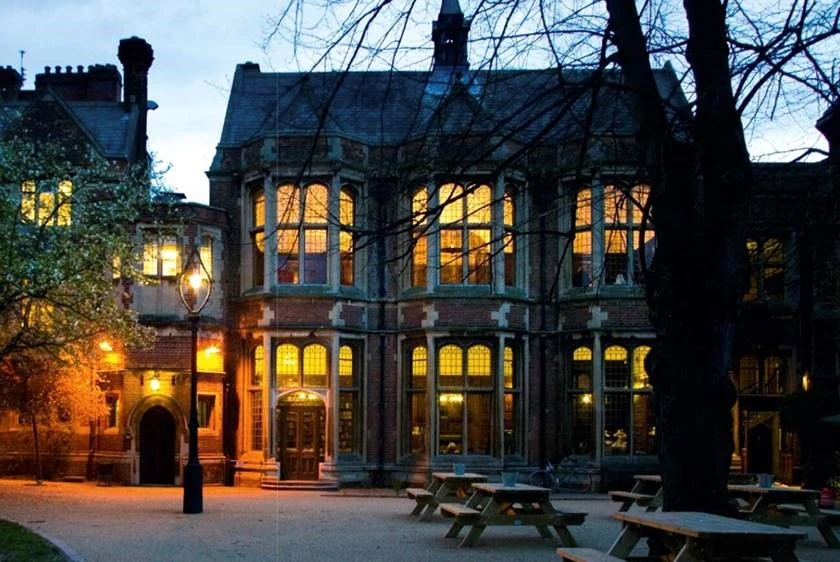
The historic Oxford Union building in Oxford, England Oxford Union Debate Controversy: Facts, Bias, and Safeguarding Free Debate
06/12/2025 By RitvikOverview
A recent Oxford Union debate has become the center of controversy following allegations of bias and the spread of misinformation. The issue was triggered by a tweet from the Pakistan High Commission in London, which shared a list of what it described as “confirmed speakers” for an Oxford Union debate titled “This House Believes India’s Policy Towards Pakistan is a Populist Strategy Sold as Security Policy.”[1] The post named prominent Indian figures, including former Army Chief Gen. M. M. Naravane, politician Subramanian Swamy, and former Deputy Chief Minister Sachin Pilot, as speakers representing the Indian side.[2] However, these individuals were never formally confirmed to participate—Gen. Naravane and Subramanian Swamy had already withdrawn due to prior commitments, necessitating last-minute replacements. The discrepancy between the official tweet and the actual speaker list quickly raised concerns about transparency and intent, prompting questions about why unconfirmed names were publicly announced. The episode has fueled speculation that the narrative surrounding the debate may have been shaped in advance, potentially to influence public perception or assign blame should complications arise. The Pakistan High Commission’s tweet went a step further by accusing the Indian delegation of “backing out at the last moment,” alleging that India had effectively handed Pakistan a “walkover.”[1] The post suggested that Indian participants had lost confidence and withdrawn without explanation. However, Indian representatives present at the venue have offered a starkly different account of events. Senior advocate J. Sai Deepak, who had been formally confirmed as a speaker, stated that he and his colleagues had prepared for the debate and remained ready to participate until they were informed shortly before the event that the Pakistani team would not be attending.[3][4] Subsequent reports indicated that the Pakistani delegation—reportedly including former Foreign Minister Hina Rabbani Khar and others—was in fact present in Oxford but chose to remain at their hotel rather than appear for the debate.[5][6] This revelation undermined the High Commission’s claim of an Indian “walkout.” Not only did the publicly released list of speakers misrepresent actual participation, but the narrative of Indian withdrawal now appears to have reversed the sequence of events. [7][8]. These sharply conflicting versions have transformed the episode into what many are describing as an Oxford Union debate fiasco, raising serious questions about the intent and conduct surrounding the event.
A Pattern of Delegitimising Institutions
Observers argue that this episode reflects a broader and troubling pattern in which prestigious institutions are increasingly drawn into political narrative-building. The Oxford Union, long regarded as a global platform for free expression and rigorous debate, is expected to function as a neutral, non-partisan space. However, recent events have raised concerns that this neutrality is being compromised by external actors and office-holders alike.
In the present case, several Indian leaders and scholars have criticised the Union for what they perceive as the promotion of a one-sided narrative under the shield of free speech. The Pakistan High Commission’s actions—publicising a misleading list of speakers and declaring victory in a debate that scarcely occurred—have been cited as evidence of an attempt to politicise the forum rather than respect its impartial traditions.
Such controversies are not isolated. There is growing concern that academic and debating platforms are being repeatedly leveraged to lend institutional legitimacy to state-sponsored narratives. Expressing his frustration over the handling of the episode, senior advocate J. Sai Deepak remarked, “Trust the Pakistanis to make a pigsty even out of the Oxford Union,” underscoring the depth of anger among those who believe the sanctity of a venerable institution was compromised for political messaging.[10].
When debates shift from genuine intellectual engagement to narrative management and optics, the credibility of the institution hosting them is inevitably weakened. Critics warn that this erosion of neutrality is especially damaging when driven by individuals with internal influence or by external entities such as diplomatic missions. If left unchecked, such trends risk transforming forums of free inquiry into tools of strategic communication, thereby undermining the very principles they were meant to uphold.
Context on the Current Oxford Union President
The controversy has also drawn attention to the role of the Oxford Union’s current leadership. The Union’s President, Moosa Harraj, brings a background that many observers consider relevant to the unfolding events. Harraj is the fourth Pakistani national to serve as President of the Oxford Union[11], and notably, he is the son of a sitting Pakistani cabinet minister—Pakistan’s Minister of Defence Production, Muhammad Raza Hayat Harraj. This familial and national linkage has contributed to perceptions of potential bias in how the debate was scheduled and managed. When the presiding officer of a major debating institution has close personal ties to one party in a sensitive international dispute, questions of conflict of interest are almost inevitable.
In this instance, those concerns have been amplified by conflicting accounts of what transpired on the day of the debate. Senior advocate J. Sai Deepak has stated that President Harraj informed him on the morning of the event that the Pakistani delegation “would not be coming,” only for it to later emerge that the team had, in fact, arrived in Oxford and was staying nearby[4]. This apparent contradiction—coupled with the timing of the Pakistan High Commission’s public statements—has fueled suspicions of possible coordination between Union leadership and Pakistani organisers. [13][14].
Further scrutiny has fallen on the Union’s treasurer, Raza Nazar, who is also of Pakistani origin, adding to perceptions among critics that key positions within the Union may have been sympathetic to the Pakistani narrative [13]. While diversity in student leadership is ordinarily regarded as a strength of international institutions like the Oxford Union, critics argue that, in this highly sensitive context, these affiliations warranted additional safeguards of transparency and neutrality. They contend that the handling of the episode—whether due to personal bias, institutional lapses, or external pressure—has ultimately undermined confidence in the Union’s commitment to fairness and impartial debate.
A Repeated Pattern of Problematic Debates
This was not an isolated incident. Just a year prior, in November 2024, the Oxford Union hosted another highly controversial debate – that time on the motion “This House Believes in an Independent State of Kashmir.” The selection of speakers for that event drew heavy criticism and protests for giving a platform to individuals linked with extremist or terrorist organisations.[15] [16] For instance, one of the invitees supporting the Kashmir independence motion was Zafar Khan, the chairman of the Jammu Kashmir Liberation Front (JKLF) [16]. The JKLF is a terrorist organisation banned in India, known for violent activities including the 1984 kidnapping and murder of an Indian diplomat in the UK [16]. Another speaker, Muzzammil Ayyub Thakur, had been accused of hate speech and has ties to groups investigated for terrorism links, according to a letter of protest sent by a British Indian community group.[17][18]
The fact that the Union invited such figures – leading to chants like “Oxford Union stands on terrorists’ side” by protesters outside[15] – shows a pattern of questionable judgment. In both the 2024 Kashmir debate and the 2025 India–Pakistan policy debate, the Oxford Union is accused of allowing its stage to be used for agenda-driven spectacles rather than balanced discourse. INSIGHT UK, a British Hindu and Indian community movement, formally objected in 2024 that hosting speakers with alleged terror links undermined the integrity of the debate[19]. The organisers seemingly proceeded regardless, and the debate in November 2024 went ahead amid acrimony, much like the 2025 debate was attempted.
These episodes suggest that certain narratives (often aligned with Pakistan’s stance) keep finding a way into Union events, even if it means normalising voices widely seen as extremist. Taken together, this repeated pattern erodes confidence that the Oxford Union’s debates are being set up in good faith; instead, it appears these forums are sometimes stage-managed to serve a predetermined narrative.
A Debate That Appeared Pre-Scripted
Looking at the November 2025 debacle, many commentators observed that the entire episode appeared pre-scripted—less like a genuine debate and more like a carefully engineered propaganda exercise. The framing of the motion itself, which portrayed India’s Pakistan policy as mere populist posturing, placed one side on the defensive from the outset. Ultimately, the event devolved into a debate among students after the anticipated senior-level exchange failed to materialise.
What raised deeper suspicion, however, was the sequence of developments in the hours leading up to the event. Well before the scheduled evening debate, Pakistani media outlets and even official channels began publicly declaring “victory.” In what one report described as a “curious turn of events,” Pakistani platforms circulated claims that India had failed to appear, alongside a purported letter—containing incorrect names of Indian speakers—alleging India’s withdrawal. At 2:44 pm, several hours before the debate was set to begin, the Pakistan High Commission tweeted that the Indian side had pulled out due to a “lack of confidence.”
Soon after, Pakistani journalist Murtaza Ali Shah triumphantly announced what he termed a “victory for Pakistan’s narrative” at Oxford, citing an audience vote tally of 106 to 50 in Pakistan’s favour[23]. A narrative of Pakistan’s supposed triumph was broadcast widely—despite the fact that the high-profile debate between opposing national representatives had not actually taken place as intended.
To critics, the objective appeared clear: to manufacture a public relations victory by portraying India as either unwilling to debate or defeated in absentia. Such choreographed theatrics, observers argue, do more than mislead public perception—they undermine the very credibility of the Oxford Union as a venue for serious, unscripted intellectual engagement. When outcomes appear declared before arguments are even heard, the integrity of the forum itself comes into question.
Should India Participate?
The episode raises an uncomfortable but necessary question: should Indian representatives—and, more broadly, any sincere participants in democratic debate—continue to engage with forums that appear compromised from the outset? In principle, debate is the cornerstone of democracy; ideas are meant to be countered with ideas, not boycotts. Yet, as the Oxford Union episode illustrates, participation in a seemingly tilted forum can become a lose-lose proposition. If one shows up, there is a risk of walking into a narrative ambush where the framing is stacked against you. If one does not—or if the event is deliberately derailed—absence itself is weaponised to project guilt, fear, or defeat.
This dilemma is no longer theoretical. Indian participants have begun openly questioning the wisdom of lending credibility to such platforms. Member of Parliament Priyanka Chaturvedi, who was initially invited as a speaker, withdrew once it became clear how haphazard and suspect the event’s organisation was. She disclosed that the Oxford Union had contacted her months in advance but then fell silent, only to send a last-minute confirmation request on November 25—prompting her firm refusal. She cited the “pathetic mismanagement” of the event and later described the Pakistan High Commission’s public narrative as “shameless and desperate,” making clear her unwillingness to legitimise what she saw as a farcical setup.[27]
Senior advocate J. Sai Deepak, who did travel to the UK in good faith to participate, later expressed regret that the situation had been manipulated, suggesting that the Indian side’s sincerity had been exploited. [5] [25] His experience highlights the core dilemma facing scholars, policymakers, and students alike: is it better to boycott debates with biased premises, or to enter unfriendly arenas and attempt to correct the record from within?
Some argue that boycotting only cedes the field, allowing the opposing side to claim uncontested victory—as effectively happened in this instance. Others counter that participation in what amounts to a rigged exercise merely confers undeserved legitimacy on a flawed process. Notably, when the Pakistani delegation failed to appear, Sai Deepak rejected the Union’s proposal to proceed with a makeshift student debate, insisting that an empty-chair spectacle would be meaningless.[26]
The result is a classic damned-if-you-do, damned-if-you-don’t scenario. Going forward, Indian representatives may need to apply far stricter scrutiny to the neutrality, transparency, and institutional integrity of international debate invitations. The cost of inadvertently validating a biased platform is high: it risks personal credibility and, in the broader contest of international perception, can inflict lasting damage on the national narrative.
Protecting Premier Institutions & True Free Speech
Ultimately, this controversy goes beyond a single failed debate—it strikes at the integrity of premier institutions like the Oxford Union. For British Indians and all supporters of open discourse, it raises urgent questions about how such forums can be protected from being reduced to stages for geopolitical theatre. The public uproar itself is a healthy sign, reflecting growing demand for accountability, transparency in speaker confirmations, and fairness in moderation. While the Oxford Union has yet to issue a formal response, the pressure to examine how its platform was seemingly hijacked is likely to mount.[28]
The broader implications for free speech are deeply troubling. Genuine open debate can survive only when platforms are not cynically manipulated. If diplomatic missions can manufacture “victories” from non-events, or if student leaders appear aligned with outside agendas, the credibility of debate everywhere is at risk. Many now argue that stricter safeguards are needed—clear invitation protocols, neutral oversight of formats, and codes of conduct preventing propaganda-driven victories when debates collapse.[29]
Preserving the sanctity of such institutions will require vigilance and a renewed commitment to fairness and honesty. The question now facing the Oxford Union—and similar forums worldwide—is stark: will they remain spaces for genuine intellectual exchange, or become instruments in larger propaganda battles? The answer will shape the future of authentic free expression.[30]
References[1][2][10][27] Oxford Union Debate Sai Deepak: Oxford debate fiasco unfolds with Indian, Pak sides trading blame over walkout - India Today
[3][4][12] Indian lawyer exposes Pak High Commission’s claim of ‘walkout’ at Oxford Union debate | India News
[5][6][7][9][11] Fact Check: Pakistan Caught Lying About Indian Delegation At Oxford Union
[8][13][14][21][22][25][26][28][29][30] Pakistan delegation fails to turn up at Oxford Union debate against India, then claims imaginary victory - INSIGHT UK
[15][16][17][18][19] British Hindus protest Oxford Union Kashmir debate over speakers' ‘terror’ links | India News
[20][23][24] Pakistani students triumph in Oxford Pak-India debate - Daily Times